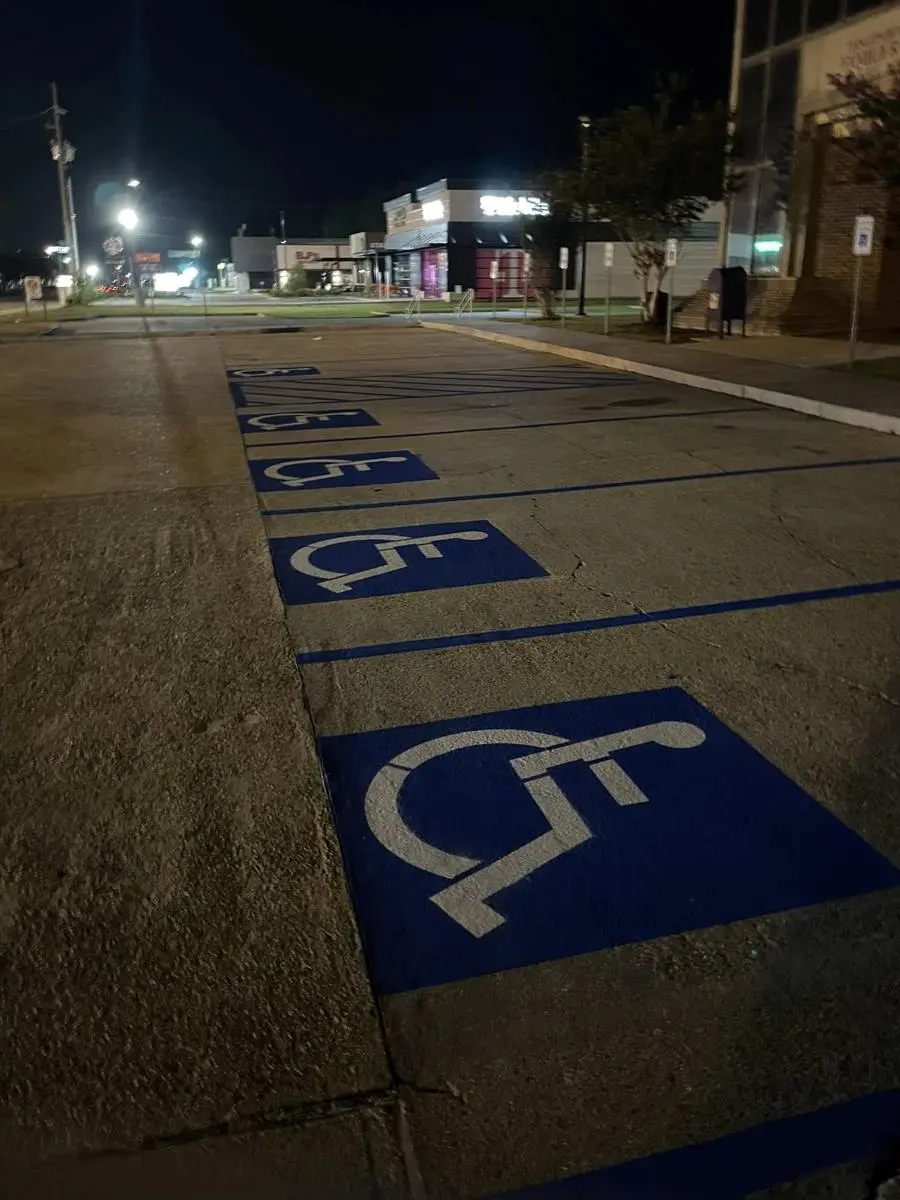
How Long Does Parking Lot Striping Take to Dry? Keeping a Lot Open During Work
How long each section of a commercial lot stays closed
Standard waterborne traffic paint dries to no pickup in about 30 minutes and takes heavy traffic after about 2 hours, according to the Sherwin-Williams Pro-Park data sheet. Fast-dry paint is ready in about 10 minutes. Sealcoat needs about a day. Working in sections keeps the rest of the lot open.
TLDR:
- A lot rarely has to close. It has to be phased, one section at a time.
- Striped sections reopen in minutes to about two hours, depending on the paint and the weather.
- Sealcoat sections stay closed about a day. Patches and crack repairs reopen once they cool.
- Entrances, fire lanes, accessible spaces and a walking route stay open in every phase.
- Spring and fall are the easiest months in Hammond, and afternoons beat dawn for paint.
- Night work near homes runs into Hammond’s 7 a.m. to 7 p.m. construction noise rule.
For a store, clinic, office or apartment community between Hammond and Baton Rouge, closing the parking lot for a day is not a real option. Customers leave, tenants call and deliveries back up. The good news is that most striping, repair and cleaning work can happen while the property stays open.
This guide covers how long each task keeps a section closed, how a phased plan works, which months and hours suit the work around Hammond, and what has to stay accessible throughout.
Need the work done without closing? Tell us your busy hours and tenant commitments. RPM will plan the sections and the order with you.
How long does parking lot striping take to dry?
The answer depends on the paint, the film thickness and the weather. Manufacturers publish dry times measured at 77 degrees and 50 percent humidity, so real days in Louisiana can run shorter or longer.
Sherwin-Williams’ Pro-Park waterborne paint lists 30 minutes to no pickup, 60 minutes to recoat and 120 minutes before heavy traffic. The company’s Hotline fast-dry paint dries to no pickup in about 10 minutes. Both data sheets note that “drying time is temperature, humidity, and film thickness dependent.”
“No pickup” has a specific meaning. The ASTM D711 test method defines it as the time from application until the marking no longer transfers to a rubber wheel. In practice, that is when tires stop tracking paint across the lot.
Striping is the fastest part of most jobs. The slower tasks are the ones that come before it.
How long do repairs and sealcoat keep a section closed?
Every task in a lot has its own reopening rule. Knowing them is what lets a crew plan the order and keep traffic moving.
| Task | When the section can reopen | Source |
|---|---|---|
| Fast-dry waterborne striping | About 10 minutes to no pickup | Sherwin-Williams Hotline data sheet |
| Standard waterborne striping | 30 minutes to no pickup; 2 hours for heavy traffic | Sherwin-Williams Pro-Park data sheet |
| Mastic repair of wide cracks | Within 30 minutes | SealMaster CrackMaster Mastic |
| Hot-pour crack sealing | Once cooled enough not to pick up on tires | FHWA crack seal checklist |
| Hot-mix asphalt patch | Once it cools to 140°F | FHWA thin overlay checklist |
| Sealcoat | About 24 hours after the final coat | SealMaster sealcoat data sheet |
| Pressure washing | Once the surface is fully dry | No published figure |
Hot-mix patches and crack sealant do not have a fixed number of minutes. The FHWA’s thin hot-mix overlay checklist says pavement opens once it “has cooled to 60 °C (140 °F),” and the FHWA crack seal checklist says traffic waits until the sealant will “not pick up on vehicle tires.” Thickness, sun and wind decide how long that takes.
Sealcoat is the long one. The SealMaster PMM data sheet says to “allow final coat of PMM to dry for 24 hours prior to opening to vehicle traffic,” and its Fast-Dry Traffic Paint data sheet says to let fresh sealer cure at least 24 hours before paint goes on. The STAR-SEAL RTS product page lists at least 20 to 24 hours in good drying conditions and notes that humidity and shade prolong the cure. That is why sealcoated sections are usually the backbone of the schedule.
How does a phased plan keep a lot open?
Phasing means closing one area at a time while the rest of the lot works normally. The plan decides which area closes first, what stays open, and when each section comes back.
The order of the work matters as much as the sections. Repairs come first, because paint and sealer need a sound surface. Cleaning comes before paint, because the Pro-Park data sheet says the surface “must be clean, dry, and in sound condition.” Striping comes last, once everything under it is ready.
Some things should stay open in every phase:
- At least one entrance and exit, so customers and deliveries can still get in.
- Fire lanes, kept clear throughout.
- Accessible parking and a clear route from it to the door.
- A walking route from open parking to the building, separated from the work.
The Pavement Coatings Technology Council’s best practices say barricades stay in place “until the sealer and any striping or other pavement markings are dry and hard enough to withstand traffic.” They also tell crews to give the customer “clear instructions about how long to wait before allowing traffic.”
Automated sprinklers and on-site car washing near the work should stop until the section reopens, which the same PCTC guidance calls for. Once the sections are set, the calendar and the clock decide the rest.
Want the phases mapped out before work starts? Send a site plan or a few photos, and RPM will propose the sections and the order.
When is the best time of year for lot work around Hammond?
Weather decides more of a lot schedule than most people expect. Paint and sealer both need dry, mild conditions, and south Louisiana gives you fewer of those days in some months than others.
NOAA’s 1991 to 2020 normals for the Hammond 5 E station show the pattern. April and May, and late September and October, have the fewest rain days and almost no nights under 50 degrees. June through August bring the most rain days and 18 to 24 days a month at 90 degrees or hotter.
Winter is harder for sealcoat than for paint. Sealer needs “50 degrees and rising” and must not drop below 50 within 24 hours, according to the SealMaster sealcoating FAQ. From November through March, Hammond averages 19 to 26 nights a month under 50 degrees.
Rain matters for paint too. The Ennis-Flint waterborne paint label says not to apply it if rain is forecast within 12 hours, and paint makers warn against painting on wet surfaces. In summer, that often means planning each section around the afternoon storms.
Why do crews wait for the morning dew to burn off?
Paint requires the air and surface to be at least 5 degrees above the dew point, according to the Sherwin-Williams data sheets. On an average south Louisiana morning, that margin is not there.
| Month | 6 a.m. temp minus dew point | 3 p.m. temp minus dew point |
|---|---|---|
| January | 5°F | 16°F |
| April | 5°F | 18°F |
| July | 4°F | 15°F |
| October | 5°F | 19°F |
These are averages we calculated from NOAA’s hourly normals for New Orleans International Airport, the nearest station with hourly data. At 6 a.m. the spread sits at or below the 5-degree line in every month, while by 3 p.m. it is three times that.
Dawn work is still possible, but it often waits for the dew to lift. Night work has its own limits, which the next section covers.
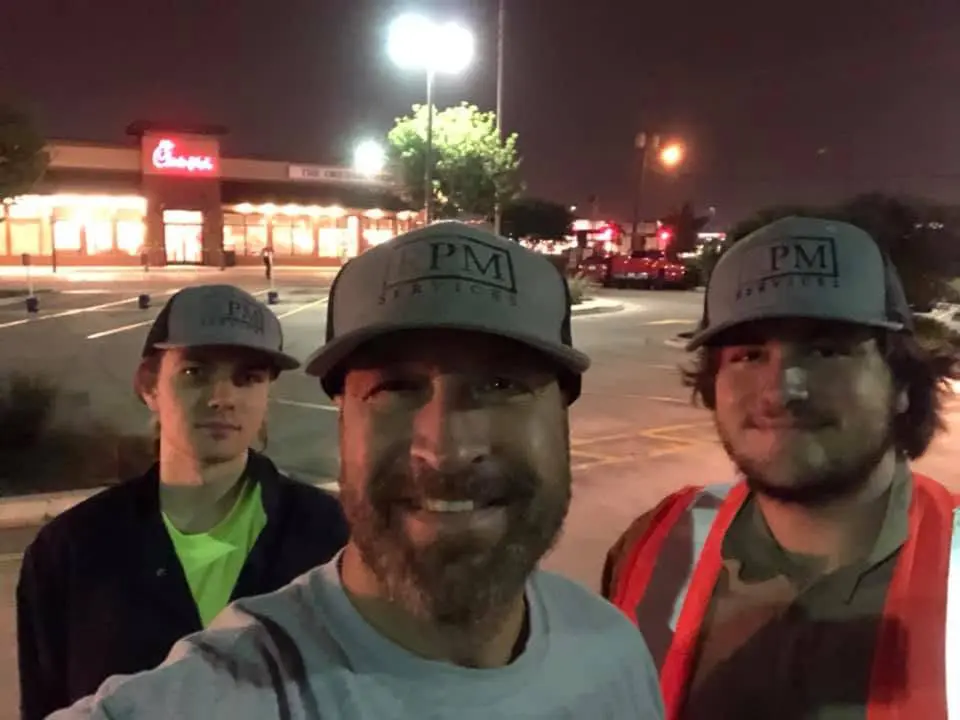
Can parking lot work happen at night in Hammond?
Sometimes, and it depends on where the lot sits. Night and early work keeps a busy property open, but noise rules and lighting set limits.
The City of Hammond’s noise ordinance limits “loud and raucous noise by construction work in or adjacent to a residential area” to 7 a.m. through 7 p.m. on weekdays and Saturdays. Exceptions take permission for urgent public safety work or a council variance. If your lot sits near homes, check with the city before planning night or Sunday work.
Other cities in the area, from Mandeville and Covington to New Orleans and Baton Rouge, set their own rules, so confirm locally. Night work also needs light. Under OSHA’s construction lighting rule, general construction areas need at least 5 foot-candles while work is in progress.
Accessible parking brings its own rules during the work.
What happens to accessible parking during the work?
Accessible spaces can be closed briefly for maintenance, but the finished layout has to meet the rules. Planning them into the fastest-reopening phase keeps the interruption short.
Under 28 CFR 36.211, businesses must keep accessible features working, but the rule “does not prohibit isolated or temporary interruptions in service or access due to maintenance or repairs.” The U.S. Access Board adds that resurfacing or resealing is an alteration that must include the required accessible spaces.
That means a sealcoat and restripe job needs the right number of accessible spaces when it reopens, with properly marked aisles. In Louisiana, those aisles also require NO PARKING lettering, which our guide to the access-aisle NO PARKING rule explains.
What property managers ask about keeping a lot open
These are the questions that come up most before lot work starts. Each answer draws on the sources above.
Can a parking lot stay open while it is striped?
Usually, yes. The lot is striped in sections, and each section reopens once the paint dries to no pickup, which takes about 10 minutes for fast-dry paint and about 30 minutes for standard paint in manufacturer testing. Entrances, fire lanes and accessible parking stay open in the other sections.
How long before cars can drive on new striping?
For a standard waterborne paint such as Sherwin-Williams Pro-Park, the data sheet lists 120 minutes before heavy traffic at 77 degrees and 50 percent humidity. Fast-dry paints reach no pickup in about 10 minutes. Cooler or more humid weather lengthens dry times, so crews often cone a section a little longer.
How long do cars have to stay off new sealcoat?
About 24 hours after the final coat, according to SealMaster’s data sheet and sealcoating FAQ. Another manufacturer lists at least 20 to 24 hours in good drying conditions. Overcast skies, high humidity or cool temperatures stretch that time, which is why sealcoat sections anchor the schedule.
What is the best time of year for parking lot work in Hammond?
April and May, and late September and October, usually work best. NOAA’s 1991 to 2020 normals for Hammond show the fewest rain days in those months and almost no nights under 50 degrees, which matters most for sealcoat. Summer brings frequent afternoon storms, and winter nights run too cold for sealer.
Can parking lot striping be done in the rain?
No. Paint makers say not to paint on wet surfaces or right after rain, and one waterborne paint label says not to apply it if rain is forecast within 12 hours. Striping also needs the surface at least 5 degrees above the dew point, which is why wet mornings often push work to the afternoon.
Do accessible parking spaces have to stay open during work?
Federal rules allow isolated or temporary interruptions for maintenance and repairs under 28 CFR 36.211. Plan the accessible spaces into the phase that reopens fastest, and keep a clear route to the door. When the work reseals or restripes the lot, the finished layout must include the required accessible spaces.
Planning work around your tenants
A phased plan starts with your calendar, not ours. Share your busy hours, delivery windows and tenant commitments, and the sections, order and timing get built around them.
RPM Services is based in Hammond and has been in the trade since 2017. We stripe and repair lots in sections, plan the order with you so entrances stay usable, and schedule evening or early work when a site needs it. That applies to our parking lot repair and maintenance work, commercial lot restriping and storefront and lot pressure washing. You can see a finished example in our night restripe project or learn more about RPM Services.
Keep the property open while the work gets done. You get a written quote and a phase plan before any work starts, so tenants know what closes and when.